I collect quotes and stories from songwriters, composers, writers and other creative professionals about their experiences of being assisted by or working in partnership with a mysterious force.
This force goes by many names. I call it intent.
You can skip to the next section if you’re already acquainted with intent.

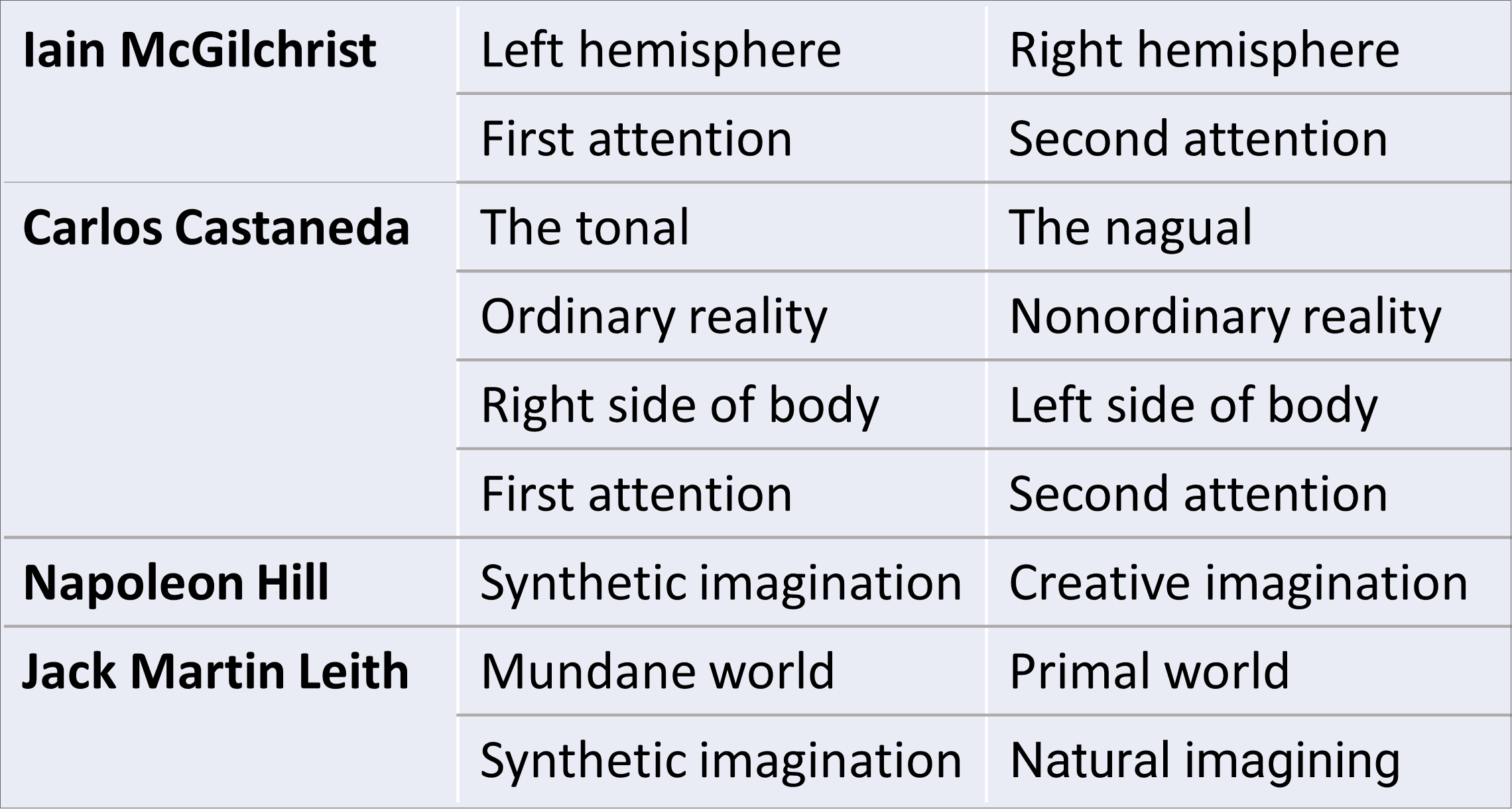
In the teachings of don Juan Matus as documented by Carlos Castaneda, intent is defined as an invisible, immeasurable force in the universe that bridges the tonal (everyday awareness; mundane world) and the nagual (nonordinary awareness; primal world), enabling navigation from the known world of the tonal to the unknown, boundless world of the nagual.
Read about:
Intent is the force that creates and animates the universe.
Don Juan Matus / Carlos Castaneda | Read more about intent
Through The Red Hand Files I have made some rather sketchy attempts to express the nature of consciousness, as I perceive it or have experienced it — the feeling that consciousness exists both within us and outside us. I have described it as a form of intelligent energy present in all things, both living and non-living, and on both atomic and cosmic scales. I have also suggested, based entirely on my own intuition, that this force is moral in nature, inherently good and fundamentally creative. Within this immanent vitality exist all the future ideas of the world — all our art, music, words, and so forth.
Nick Cave, The Red Hand Files, Issue 356
In the three items below, the terms Creative Action, media and Infinite Intelligence have the same meaning as intent.Although we can’t tell Intent what to do, Toltecs do invoke it and use it. I know that this seems to be a contradiction in terms. But since we are all part of the one universal life, if our purpose is the same as the purpose of the Infinite, then our command becomes the command of the Infinite. When this happens, we can align with Intent and utilize it in creating our life.
Sheri Rosenthal, Intent versus Intention; is there a difference? (no longer available — contact me for more information)
Rick Rubin says something very similar
We can learn to link with a stream of Creative Action so fully that it seems that all we think and do originates from within ourselves, rather than from the eternal realm. This degree of rapport and unification with Creative Action is exhilarating and deeply satisfying.
Edward Matchett, industrial design teacher and Creative Action author
It would be quite good to consider media along the lines of something seeking to manifest through us.
Anthony Blake, Director of Studies at The DuVersity, who knew and collaborated with Edward Matchett
View a list of terms synonymous with intentThrough the faculty of creative imagination, the finite mind of man has direct communication with Infinite Intelligence. It is the faculty through which ‘hunches’ and ‘inspirations’ are received. It is by this faculty that all basic, or new ideas are handed over to man.
Napoleon Hill in his 1937 bestseller Think and Grow Rich!
See what Napoleon Hill means by Infinite Intelligence
The name is not important as intent is an aspect of primal world where there are no names, descriptions, definitions or distinctions.

Roll call
David Arnold
Paul McCartney
Iain McGilchrist
Brian Wilson
Quincy Jones
John Lennon
Geezer Butler
Peter Hook
Paul Simon
Nick Cave
Todd Rundgren
David Gilmour
Alan Ayckbourn
Marianne Elliott-Said (Poly Styrene)
Quentin Tarantino
Ian Rankin
Sting
Dominic Miller
Lionel Richie
Danielle Haim
Flea
Bryan Ferry
Frank Zappa
Philip Roth
Leonard Cohen
Michelangelo
Ravi Shankar
John Coltrane
Martha Graham
Rick Rubin
Zaid Hassan
Yannis Philippakis
Willy Russell
Michael Frayn
Stephen Malkmus
Sonny Rollins
See also: David Arnold: The Hollywood composer on the scores that came to him in dreams, Puff Daddy, and why an MP3 is no match for a live orchestra, on The Independent website
Source: Wikipedia – Yesterday (Beatles song)
“Often when you’re working you feel that something is coming through you … I mean of course it is largely coming out of you but there is something that is moving through you that is using you to do this.”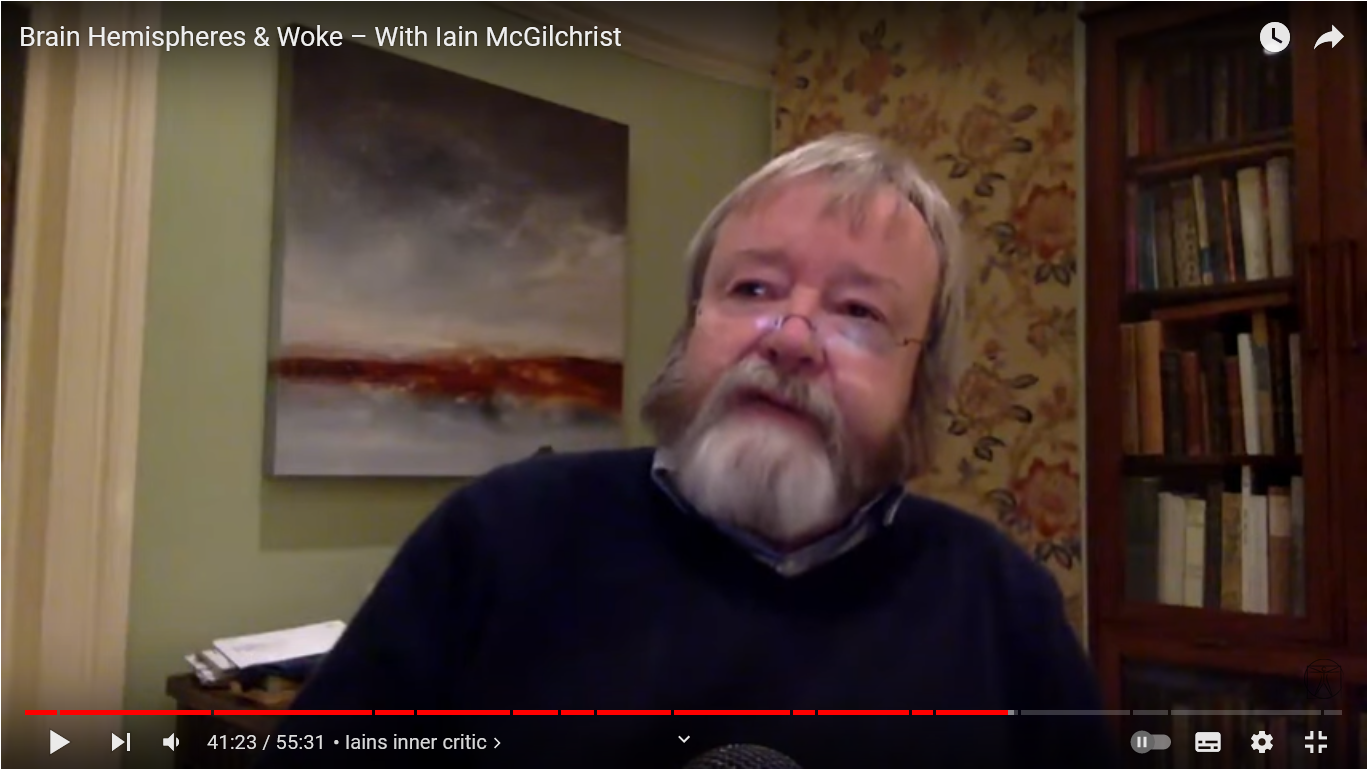
Psychiatrist and author Iain McGilchrist in a video conversation (running time 55:31) with Mark Walsh, Embodiment Unlimited | Go to the relevant part of the conversation
“I believe that songwriting is an unconscious thing. I don’t believe anyone can concentrate on music and write music, it comes from a higher place, I’m almost sure of that.”Brian Wilson in conversation with George Martin, cited here | Watch on YouTube
Mark Ronson in his obituary of Quincy Jones published in The Observer | View the obituary
Answer (excerpt): Lennon’s personal assistant, Fred Seaman, said Lennon would sing a melody with made up words with the intent of changing them later. Then he would sit for hours at the piano and sing the same song in progress over and over waiting for the right words to come to him. He told Seaman the right words would eventually “come down from above”.
Kym Chaffin | View source (Quora)
The members of both bands describe how their songs seem to come through them rather than from them, almost as if they were ‘channeling’ them. Black Sabbath’s bass player Geezer Butler described how the band’s ‘first four albums just came from nowhere.’ Similarly, Joy Division bassist Peter Hook has described how their songs ‘just flowed like rain … We couldn’t stop writing them.’ Joy Division’s most famous song ‘Love Will Tear Us Apart’ was written in three hours, while Black Sabbath’s ‘Paranoid’ was written in 20 minutes, after the band was asked to ‘jam something’ at the end of a studio session. Because of this, both bands felt that their music was something ‘other’ to them, a mysterious force that they couldn’t explain or understand.”
Group Flow: When Groups Gain Access to a Mysterious Creativity, by Steve Taylor, on Psychology Today website
[Paul Simon] has said that the idea for the album came to him in what he described as a powerful dream he had on January 15, 2019, in which a voice told him “You’re working on a piece called Seven Psalms.” The musician, singer and songwriter Nick Cave was asked:“I’m a songwriter. I’m seriously blocked. Do u have any spare lyrics I can have?”
This is part of Nick Cave’s response:
“My advice to you is to change your basic relationship to songwriting. You are not the ‘Great Creator’ of your songs, you are simply their servant, and the songs will come to you when you have adequately prepared yourself to receive them. They are not inside you, unable to get out; rather, they are outside of you, unable to get in. Songs, in my experience, are attracted to an open, playful and motivated mind. Throw my song away – it isn’t that good anyway – sit down, prepare yourself and write your own damn song. You are a songwriter. You have the entire world to save and very little time to do it. The song will find its way to you. If you don’t write it, someone else will. Is that what you want? If not, get to it.”
View the entire answer on The Red Hand Files website
Todd Rundgren: Well, it doesn’t come from dreams. What happens is I will start working on a project, and then I will start writing songs as a part of that project. So my head suddenly gets into this space of writing. And that completely spills over into my subconscious life, even when I’m sleeping. So I’ll suddenly, in the middle of this, I’ll have a dream that I’m in the studio, listening on the speakers to a song. And sometimes it’s a really simple song, something I possibly would not even write. A song like “Bang The Drum All Day,” I literally dreamed that song. I didn’t dream every single word of it, I had to kind of figure out how to move the whole thing along, but the whole chorus and everything: total, total dream.
Source: Red Bull Music Academy website
David Gilmour, The Reader Interview, on The Guardian website
‘I woke up after the stroke,’ he says, ‘and for the first time since I was 14 or 15, I had no idea for a play. I felt totally empty and desolate. But I thought, You’ve got a good back catalogue and can start reviving the buggers and bore everyone to tears. Six or seven weeks later, a tiny germ of an idea arrived and I said to myself, Thank you, God – because that is the one thing you can’t legislate for: that initial spark.’”
‘My first play was terrible!’ Alan Ayckbourn on his dazzling career – and writing his 90th play, by Michael Billington, in The Guardian
Marianne Elliott-Said aka Poly Styrene, frontwoman for the punk rock band X-Ray Spex, cited in The Guardian, 26 April 2011 (view)
Quentin Tarantino: This is not in any way a facetious answer to this, but: I am a writer. That’s what I do. It’s a writer’s job not just to write about himself but to look at the rest of humanity and explore it – other people’s way of talking, the phrases they use. And my head is a sponge. I listen to what everyone says, I watch little idiosyncratic behavior, people tell me a joke and I remember it. People tell me an interesting story in their life and I remember it.
Interviewer: And if you don’t remember it?
Quentin Tarantino: Then it was probably not worth remembering. The thing is, it’s in there – whether it’s six months or fifteen years later, when I go and write my new characters, my pen is like an antenna, it gets that information, and all of a sudden these characters come out more or less fully-formed. I don’t write their dialogue, I get them talking to each other.
Source: The Talks
The Guardian, 26 March 2011 (view)
Sting, cited by Benny (Sodajerker) in The Surprising Truth about STING’S Songwriting Process (video, 11:03)
Rick Beato (prominent music YouTuber): Do you write while you’re touring?Dominic Miller (Sting’s guitarist): I don’t write while I’m touring. It doesn’t inspire me so much. I like to write when everything stops. I need to summon the ideas, to turn on the signals. I turn on the wifi. And I go for long walks. And I get into that creative zone. And I open the windows to creativity.
Dominic Miller Wrote The Most Famous Riff Of All Time — YouTube video (1:03:43) featuring Rick Beato and Dominic Miller
“When you write a song it’s almost mystical. It feels as if the words just come out and it can be months or even years later you realise: ‘That’s what was happening.’”

Danielle Haim (centre), ‘It shook me to my core’: 50 years of Carole King’s Tapestry, on The Guardian website, 12 February 2021 | Photo credit: Raph_PH | CC BY 2.0
“‘You grab it, slide around on it, and feel it with your hands,’ Red Hot Chili Peppers’ Flea once said of his signature instrument. ‘You slap, pull, thump, pluck, and pop, and you get yourself into this hypnotic state, if you’re lucky, beyond thought, where you’re not thinking because you’re just a conduit for this rhythm, from wherever it comes from, from God to you and this instrument, through a cord and a speaker.’”The 50 Greatest Bassists of All Time, Rolling Stone, 1 July 2020
BBC Radio 6 Music, 30 December 2012
Frank Zappa: Well, I’m specialised. What I do on the guitar has very little to do with what other people do on a guitar. Most of the other guitar solos that you hear on stage have been practised over and over and over again. They go out there and they play the same one every night and it’s really just spotless. My theory is this: I have a basic knowledge of the mechanical operation of the instrument and I’ve got an imagination. And when the time comes up in the song to play a solo, it’s me against the laws of nature. I don’t know what I’m gonna play or what I’m gonna do. I know roughly how long I have to do it, and it’s a game where you have a piece of time and you get to decorate it, and depending on how intuitive the rhythm section is that’s backing you up, you can do things that are literally impossible to imagine sitting here. But you can see them performed before your very eyes in a live performance situation.
YouTube Shorts | View
Terry Gross is in conversation with Philip Roth, author of Portnoy’s Complaint and other major works.
Thanks to Praveen Vaidyanathan for sharing this in his X post.
Terry Gross: When you’re writing a book, do you have everything mapped out before you start? Do you know the fate of all the characters? Do you know what urges will lead them astray and where their fulfilment will be, if they ever find it, and how they’ll interconnect, and what surprises are going to happen and overturn their expectations?
Philip Roth: I know that when I hand the book into the publisher.
Terry Gross: But not before?
Philip Roth: No. I don’t know anything in the beginning, which makes it great fun to write, you know? You don’t know anything. You don’t even know how to write. So you begin every book as an amateur and as a dummy. And in the writing, you discover the book. Of course, you’re in charge. But gradually by writing sentence after sentence, the book, as it were, reveals itself through you to your language – through your language, rather. So each sentence is a revelation. I’m not exaggerating. Each and every sentence is a revelation. And what you’re trying to do is hook one sentence to the sentence before and the next one to that sentence. And as you do, you’re building a house, you know? And the architect and the contractor, they know what the house will look like when it’s done. And that’s the big difference. I don’t have any idea what it will look like when it’s done. I don’t have any idea whether it will even be done because you don’t know what you’re doing when you’re at work. Which is to say that I don’t know the answers to those questions you raise.
Leonard Cohen | Leonard Cohen at 80: “The other side of the hill is no time to tarry”, by Neil McCormick, in The Telegraph
Leonard Cohen: If I knew where the songs came from, I’d go there more often. It’s a mysterious condition.
Songwriters on Songwriting, by Paul Zollo | via Eric Lynn’s Substack: Undefining
“It was [Nitin Sawhney’s] interest in theoretical physics, combined with ancient Indian philosophy, that inspired Confluence. ‘We started talking about where creativity came from and we thought about people like Michelangelo, who said that the statues were already hidden in the marble around you. Or Ravi Shankar, who said the raag exists in the air around you. Or John Coltrane, who talked about improvisation being like a bird that you have to catch in the air,’ he says.”Oh no! Sawhney’s off talking about physics again…, in The Independent on Sunday
It is your business to keep it yours clearly and directly, to keep the channel open. You do not even have to believe in yourself or your work. You have to keep yourself open and aware directly to the urges that motivate you. Keep the channel open.
No artist is pleased. There is no satisfaction whatever at any time. There is only a queer, divine dissatisfaction, a blessed unrest that keeps us marching and makes us more alive than the others.”
“Our work embodies a higher purpose. Whether we know it or not, we’re a conduit for the universe. Material is allowed through us. If we are a clear channel, our intention reflects the intention of the cosmos.”Rick Rubin, The Creative Act: A Way of Being
Zaid Hassan, Connecting to Source: The U-Process, on Systems Thinker website
Yannis Philippakis, founding member and lead vocalist of the band Foals, in Crack magazine, Issue 28
Michael Frayn, On writing: authors reveal the secrets of their craft, on The Guardian website
“I’m not supposed to be playing, the music is supposed to be playing me. I’m just supposed to be standing there with the horn, moving my fingers. The music is supposed to be coming through me; that’s when it’s really happening.”
Read more
A collection of quotes about intent
Intent — the generative impulse
The embodied Greatcreator model | Download slideshow
Synthetic imagination and natural imagining
Search the site
Not case sensitive. Do not to hit return.